AI & Creation Care

It seems to me that we are touching upon a great many issues within this conversation about AI and its impact upon creation: to name just a few, we run head-on into questions about what exactly is the good life, the use and accumulation of power, economics, politics, faith, what it means to be human, and what our responsibility is to our co-members of creation. Within this brief space, I want to focus upon two things that will be helpful for thinking critically about the degree we embrace this or any other technology: the character of work, and sabbath.  

My aim here is not to paint AI as inherently bad or evil. AI may certainly be aimed toward human and other-than-than human well-being. Insofar as it is used with these ends in mind, and the environmental harms incurred in AI generation are mitigated, then perhaps it can be a useful tool for caring well for creation. But these are significant qualifying “IF’s.” Discernment is required, along with willingness to set limits upon its use. However, within the context of an increasingly deregulated, hyper-capitalist economy, animated by the logics of power and profit, with little to no moral or ethical limits set upon either the development or deployment of the technology, not only is AI intentionally designed to play upon elements of human frailty, there appears to be little motivation for building significant resistance to the vagaries of human sin. This is perhaps unsurprising; the central organizing value for the corporate entities generating AI is profit – not the well-being of creation. Yet it reveals significant issues for those who embrace creation as that which belongs to God, and understand themselves as those who are tasked with care for creation.

Context: The State of Creation

Several years ago, while living in Scotland, I had the opportunity to spend time ‘hillwalking’ through regions in and proximate to the Cairngorms. While spending a few days at Glenelg, near the Isle of Skye, I recall feeling a lingering dis-ease as I walked among the hills and along the frigid gray waters, but the cause eluded me. 

A month or two later, walking among the hills of the eastern side of the country, the vague dis-ease returned. This time, skirting a small lake rounded with trees and grass land, the cause became clear: the usual voices I listened for while hiking, were silent. No birdsong, no buzzy bug sounds, no mammals of any size skittering through the grass. In the silence, I was experiencing absence; a concrete expression of the reality that the UK has lost forty percent of the diversity of living beings that once existed on that island.[1] I journeyed through ecologies becoming ghost towns. What is worse, is that it took me so long to notice. Creation was groaning; I just had not recognized it.

The Empty Promises of Technology

In 1951, while the stench of burnt human flesh lingered in the world’s consciousness, Abraham Heschel published The Sabbath.[2] The gruesome technological efficiencies of Nazi Germany, and the suffering wrought by American ingenuity in dropping atom bombs upon Japan, left little doubt that these and other technological developments presented a threat:

Technical civilization is the product of labor, of man’s exertion of power for the sake of gain, for the sake of producing goods. It begins when man, dissatisfied with what is available in nature, becomes engaged in a struggle with the forces of nature in order to enhance his safety and to increase his comfort.[3]

Surely, technological developments are frequently a response to basic human needs. Yet Heschel adverts to a problem: technology, most especially in the ‘Capitalocene’ era, is increasingly rooted in the inward curvature of the human heart, propelled by pride, fear and greed. Heschel marvels at the prickly embrace of these technologies. “How proud we are of our victories in the war with nature, proud of the multitude of instruments we have succeeded in inventing, of the abundance of commodities we have been able to produce.”[4]  For the people of God, alarm bells ought to be sounding: why are we at war with creation – that which God made, loves, sustains and redeems? One also wonders at the increasing poverty in the face of promised ‘abundance.’ The benefits promised in the production and dispersal of commodities is uneven at best. Moreover, as the loss of biodiversity increases across the globe, why is there an increasing scarcity of what had been abundant within creation? It seems that even as our knowledge of the world increases, we are often furthering its destruction rather than its flourishing.

A Diagnosis

Heschel points to the ultimate unraveling: despite our seeming ‘victory’ over ‘nature’, “our victories have come to resemble defeats. In spite of our triumphs, we have fallen victims to the work of our hands; it is as if the forces we had conquered have conquered us.”[5] And yet, many people continue to rush uncritically into the technological embrace.

Ellen Davis’ discussion of sloth offers insight into our current situation.[6] Far from the listless indolence we might imagine, Davis draws upon Karl Barth, who frames the vice differently. It is a sin of commission; as Davis glosses it in a pithy phrase well-worth remembering, sloth is “foolishly assertive action.”[7] Foolish, for central to sloth is the arrogance of believing “we can authoritatively tell ourselves what is true and good.”[8]

For many of us, fear is also a driving factor; we fear for our jobs, we fear missing out on economic ‘goods,’ we fear being left behind in the seeming gold rush of the A.I. economy. It is not implausible to think that, for instance, fear drove the leaders of the California State University system to jump with both feet onto the AI bandwagon – but with possibly too little regard for the implications for either employees or students. Either way, Barth is clear about the final outcome of sloth: it pulls creation apart at the seams, even as it thinks it is saving itself.[9]

The destructive fruit of sloth is not, then, limited to the individual; it impacts communities by short-circuiting the sense of responsibility that ought to be held for others. The present generation, those who have gone before, and future generations become subservient to the self. As Davis notes, work that does not move beyond self-love, is not extended to enhance the life of the wider community, “cannot free either worker or community from profound anxiety or care.”[10] Nor, for that matter, can it free creation from its groaning.

Paths for Resistance

Contrary to sloth, Davis asserts good work as that which is pursued for the good of the community, for the good of creation, and as motivated and animated by love rather than selfishness. However, wise discernment is necessary for sorting the wheat from the chaff, and, in the case of AI, discerning when it might be beneficial, and when deleterious. More importantly, it necessitates that we discern the voice of creation, becoming those able to recognize both its flourishing as well as its groaning, and then, to respond wisely in care for creation. Here, the practice of sabbath becomes vital. 

Two elements carry particular import for this discussion. The first has to do with the ceasing of work. As Jurgen Moltmann frames it, on the sabbath, God’s rest is a ceasing from God’s creative activity, rather than an attempt to flee from creation.[11] Indeed, it is ceasing that enables the second crucial element of sabbath: presence. For it is here, in God’s peaceful presence to creation, in which God enjoys the goodness of creation, recognizing it in all of its beauty and brokenness and groaning, that creation can also, finally, find refuge.[12] Rather than being threatened with non-existence, as Moltmann observes, in God’s rest, “all created beings find their own rest. In the presence of his existence is the blessing of their existence.”[13]

One might see how ceasing from labor, might foster one’s ability to discern creation’s voice, and resist those sloth-inducing patterns of life that render a person vulnerable to the problematic elements of technology. If we are those who are learning to hear, see and discern creation, perceiving both its well-being and its groaning accurately, sabbath rest and presence may help us to align our work, such that it is conditioned by peace rather than exploitive tendencies, seeking creation’s flourishing rather than furthering its demise. In fact, in sabbath rest and peace, the deceptive allure of AI loses its sheen, exposed ultimately as a trinket in view of God and God’s good, wounded creation.


This essay from Leslie Herrmann is based on the closing words she presented at AI & Creation Care: Friends, Foes or Future, a faith & society workshop hosted by NCB this past June in collaboration with the Center for Theology & the Natural Sciences, Graduate Theological Union, Berkeley, CA. A recording of the event can be found here.
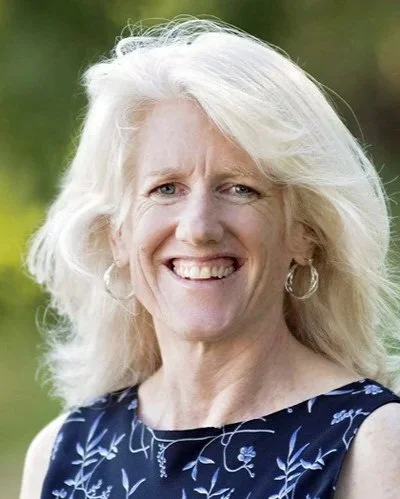
Leslie Herrmann is a scholar-advocate, holding degrees from Regent College (MA, Th.M), and the University of Aberdeen (Ph.D). Her publications center around theologically informed environmental ethics, and most recently, aim at fostering connections between humans and other-than-human members of creation through a constructive interplay between theology, ethics and aesthetics. 


Footnotes:

 [1] Josh Davis, “The state of nature: 41 percent of UK species have declined since 1970s” Natural History Museum (October 2019), https://www.nhm.ac.uk/discover/news/2019/october/the-state-of-nature-41-percent-of-the-uks-species-have-declined.html.

[2]  Abraham Heschel, The Sabbath (New York, NY: Farrar, Strauss and Giroux, 1951): 27.

[3] Heschel, Sabbath, 28.

[4] Heschel, Sabbath, 27.

[5] Heschel, Sabbath, 27.

[6] Ellen F. Davis, Scripture, Culture, and Agriculture: An Agricultural Reading of the Bible (New York, New York: Cambridge University Press, 2009): 139-154.

[7] Davis, Agriculture, 140. 

[8]  Karl Barth, in Davis, 140.

[9] Barth, in Davis, Agriculture, 140. 

[10] Davis, Agriculture, 142. 

[11] I am skimming over the top of Moltmann’s fulsome discussion. See God in Creation (Minneapolis, MN: Fortress Press, 1993). I also engage his thinking with reference to implications for specific issues in environmental ethics; see Leslie Herrmann, “The Menace of Non-Being: On Nestle Waters’ Plunder and Jurgen Moltmann’s Sabbath Peace.” In Journal of Religious Ethics 48 no. 2 (2020): 201-221. 

[12]  Jurgen Moltmann, God in Creation (Minneapolis, MN: Fortress Press), 278. 

[13] Moltmann, Creation, 282. 
Gathering as a Countervailing Act

Native Alaskans have story circles where tribes, villages, and families regularly gather for sacred remembering. It is in the context of story circles where each person is dignified for their holy image, the particular narrative they live and experience. In the telling and in the receiving of those stories, the gathered community becomes part of one another stories. They are in the realm of the Ancestors, those who are presently present and those who have gone to the Creator. It is in remembering, that we are re-membered, more knit to one another in a deeper and profound way than when before the story circle convened. This is what in our Christian tradition is called koinonia, translated “fellowship” or “communion” (1 Cor 1:9; 10:16-17), is what Filipinos call kapwa, akin to Zulus of southern Africa call ubuntu, and Latinx theologies calls en conjunto. That is to say, we belong one to another, that to understand the self it is in relation to the wider community to which one belongs. The community is not the sum of the individual parts. Rather, it is I-and-We or the I-in-We. This means there is mutuality, accountability, reciprocity. Or to put it in terms of the trifold apostolic gifts, it is the sharing and giving of faith, hope, and love. (1 Cor. 13:13)

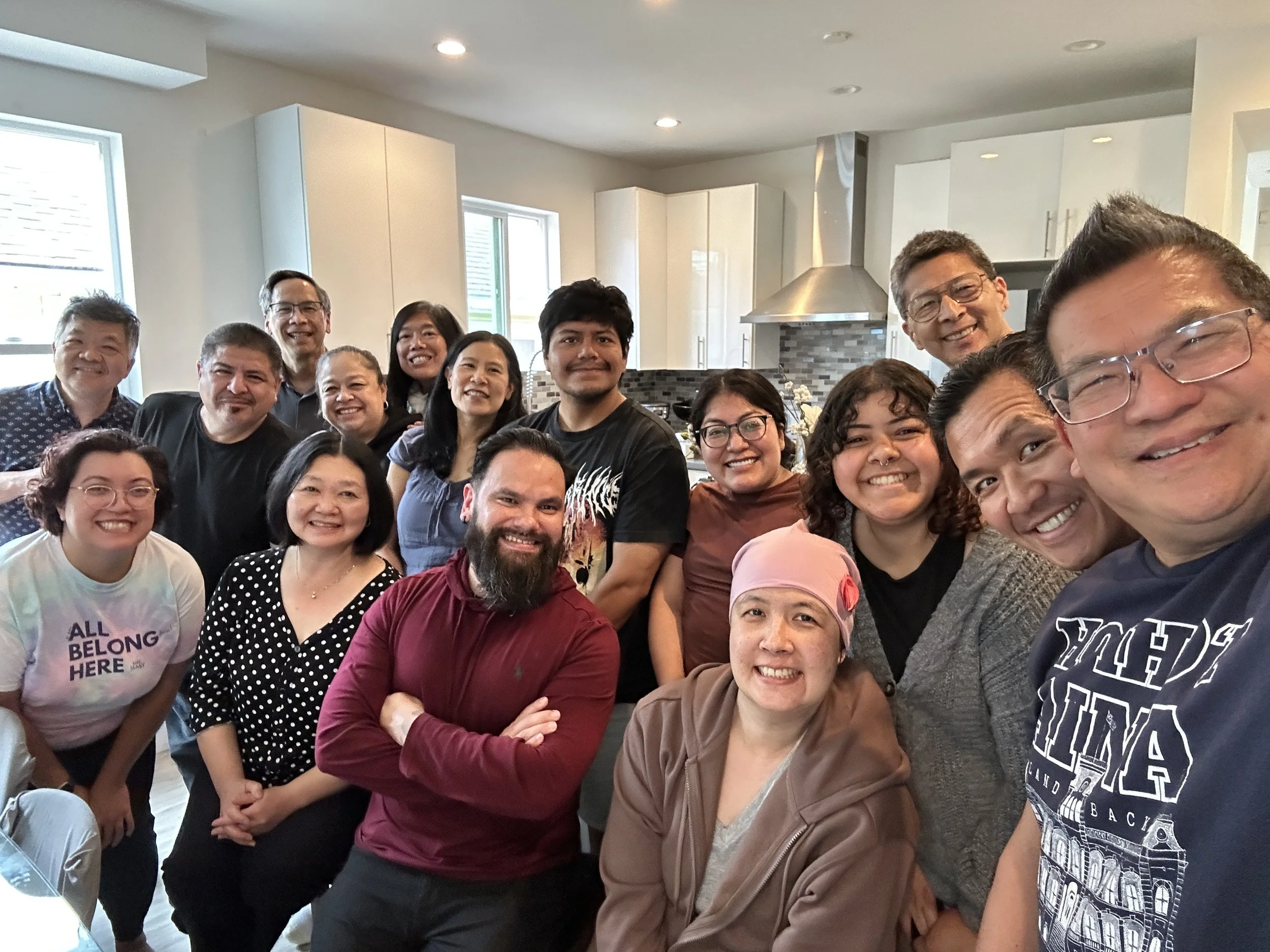
This past Juneteenth, several of us representing Asian American and Latinx churches gathered for a 3-day retreat in Daly City, organized by New College Berkeley. Over food and table conversation in our AirBnB, we quickly connected and opened up with one another. This was an ecumenical, intergenerational gathering of pastors, theologians, and community organizers who embody and live out the Christian faith in churches, seminaries, and nonprofit organizations. We spent time analyzing the forces and factors in American culture, history, polity, and the body politic that have shaped and continue to shape our communal identities as Asian American and Latinx American Christians. We recognized the ancestry we inherit, the struggles of all those who have gone before us, and the present struggle we are engaged in for protection of and advocacy for the marginalized and vulnerable. We were mindful and heartful of the present circumstances and conditions in the United States where immigrant and migrant communities live in fear of being separated from their families, detained, or deported. 

As a newcomer to New College Berkeley’s program, I observed how our gathering was in itself a countervailing, countercultural act to the white Christian nationalist spaces in which we live, and move, and have our being. Our retreat was the one space in time, a punctuation in that week for a group of God’s children of color with shared ancestry can resonate and relate with one another as to the sacred Ancestors’ struggle for equality and equity, for embodied faith that integrated our Asian American Christian and Latinx American Christian identities over and against powers and principalities – whether ecclesiastical, theological, political, socio-cultural-economic – which seeks to homogenize or totalize who we are and whose we are. 

Retreat attendees together, author Neal is behind Craig Wong on right of photograph.


Our gathering is a testament and a living testimony of resilience and courage to articulate faith and to not be hijacked or defined by terms that are foreign to or contradict our experiences and perspectives as communities of color.

Gathering as we did on Juneteenth was intentional. Following the retreat, some of us walked two miles to a Filipino American Church of the Nazarene in Daly City to analyze the implications of Juneteenth, in conversation with African American leaders who serve in church and the corporate world. Through a panel discussion, representatives of our three communities of color – Asian American, Latinx American, African American – shared testimonies of how they came to integrate their Christian faith and ancestral heritage, and the struggles in doing so, particularly in White spaces. They shared their respective journeys in education, raising families, recognition from their church communities, and their own discovery of their sense of selfhood. 

The month prior, I was in Juneau, Alaska as a new board director of New York-based Auburn Theological Seminary. Board members went to Alaska as part of Auburn’s initiative on narrative and storytelling. We wanted to participate in Alaska’s biennial “Celebration,” a festival of native Alaskans where storytelling and the sharing of indigenous Alaska heritage is on full display so that all generations can internalize the robust richness of common, diverse ancestry. Connecting that experience with the Juneteenth retreat, I came away from that monthlong engagement with deep gladness, joy, and gratitude for the value and power of gathering. Gathering is both for celebration, but also to share in collective trauma, and therefore of collective healing. Whether it be native Alaskans supporting each other in surviving the horrors of colonial abuse, to Asian American and Latinx American pastors sharing of how they were maltreated and ignored by White counterparts and colleagues, or African American leaders testifying of having to codeswitch in their communications so as to survive and thrive in spaces that question their credibility and integrity in occupying those same spaces, the power of gathering is to empower and co-inspire one another in the struggle.

One of the gifts given and received in Alaska was a book, Spirit Wheel: Meditations from an Indigenous Elder (Broadleaf 2023). It was written by Steven Charleston of the Choctaw Nation, and who was formerly Episcopal bishop of Alaska, and previously president and dean of the Episcopal Divinity School and professor of systematic theology at Luther Seminary. Charleston wrote this, titled “To Turn the Wheel of History” :

To each generation a task is given
By a will and purpose greater than our own
A work to be accomplished,
Even without knowing the outcome. 

We are called, as if by an instinct of migration
Something deep in our collective subconscious,
A summons to see the moment clearly
To understand the implications, and then to respond
To act in order to change, to turn the wheel of history,
To save what must be preserved. 

Now is our time. This is our calling.
We see the need. We know the consequences.
Let us be about what must be done.


Amen. May it be so.

NCB Cohorts: Into the Third Year

NCB Cohorts: Into the Third Year

In NCB’s experience, the best settings for growth and change are learning communities. Relationships, extended conversations, shared experiences, mutual discoveries, and sometime debate are, together, deeply formative in ways that regularly go far beyond individual learning.

We are now into the third year of our core NCB learning community: our cohort program. Each year a diverse group commits to a nine-month journey together of discerning gospel faithfulness through retreats, readings, and monthly discussions.

Socks

It's hard to overstate the value of… meeting humans in the flesh. Looking at them from less than two feet away. Elbowing around them into a cupboard for a drinking glass. Following their turn from the bathroom. 

They didn’t know I noticed, but…I could tell they were working extra hard to make sure I felt included. That my decision to fly from down Chicago had been “worth it.”                                   

I hadn’t fully realized…how much I needed the experience of entering a circle I was explicitly invited into, without having to do any of the work.

Gratitude and Sorrow

These three beloved sisters, passionate for gospel witness here and abroad, have made their indelible mark on what NCB is today.  Our present desire to elevate the visual arts to “awaken  theological imagination” harkens back to Laurel’s founding influence. Martha’s unswerving commitment to the Church in China inspires us to engage global voices today. And Sharon’s legacy of thoughtful writing continues as we further integrate Radix Magazine as the literary arm of NCB’s mission.  For all that NCB is becoming, to these three we are deeply indebted.

MLK Retreat Insights

These were my thoughts and prayers going into the MLK Retreat on January 19, 2025 in Benicia, CA: 

We have all come to this lovely place from different parts of the Bay Area and country, and we all bring different thoughts, feelings, prayers and people we are holding within us.  We may carry a well of emotions over the destruction of the Los Angeles fires, the war and conflicts in the Middle East, the presidential inauguration and personal concerns such as loved ones who are sick and hurting. 

There is no need to set all those things aside.  All of who we are is welcomed here. Because all of who we are is what will be engaging Scripture, these important words from MLK, and each other at this retreat. To discern our prophetic task as gospel friends authentically will involve our whole selves.

A Think Tank Among Gospel Friends –– NCB Highlights of 2024

NCB Highlights of 2024

Friendship arises out of mere companionship when two or more of the companions discover that they have in common some insight or interest or even taste which the others do not share and which, till that moment, each believed to be his own unique treasure or burden. The typical expression of opening friendship would be something like: “What? You too? I thought I was the only one!”  
- C.S. Lewis, The Four Loves, 1960.

How productive was your organization last year? This is what hypercapitalistic societies always want to know. What was your gross output? How many projects did you successfully complete? How many individuals were impacted? Did your customer base grow as projected at the beginning of the fiscal year? What was your bottom line?

Rather than productivity, Jesus uses the language of fruitfulness: “I am the vine; you are the branches. If you remain in me and I in you, you will bear much fruit” (John 15:3). He goes on to describe fruitfulness as love for one another and that “greater love has no one than this - to lay down one’s life for one’s friends” (John 15:13). Simply put, self-sacrificial friendship is the highest form of love!

C.S. Lewis helpfully explains what so often sparks friendship, i.e. the discovery of some keen interest shared by two or more individuals, whether that be poetry, pickleball, or Coen Brothers filmography. For NCB, the common passion is critical gospel inquiry: What does it mean to live faithful to Christ in the current social, cultural and political moment?  Therefore, it is our joyful task to create “third spaces” where folks can together grapple with such questions while keeping company that, Lord willing, could result in lasting, sacrificial friendship. This is why we envision ourselves as a “think tank among gospel friends.” In pursuit of this vision, here are seven highlights of 2024:

The Barmen Retreat.  With concerns about the growth of religious nationalism at home, we rented a 9-bedroom home in June to engage Karl Barth’s Theological Theses of Barmen to learn from the Confessing Church’s resistance to facism in 1930s Germany. The retreat represented quintessential NCB with participants across generation, culture and theological tradition.

Pilot cohort program.  In a first-time experiment, we gathered a diverse, intergenerational group of fourteen Christ-followers (including theologians, pastors, working professionals and students) from throughout the Bay Area (East, West & South Bays) to begin a 9-month co-learning journey, engaging theology and current issues within the local and national context. 

The Saturday “workshop retreat.” Inspired, in particular, by an all-day Saturday workshop we held in Berkeley, “Teologia en Conjunto” (Theology in Community) led by Dr. Robert Chao Romero, the strength of extended learning times, over short 90-minute one-offs, was evident. The nomenclature of “workshop retreat” denotes both generativeness and restoration.

Growing congregational partnerships. A first ever collaborations with a denomination’s Latino pastors network (of the Evangelical Covenant Church) and an African-American Presbyterian Church in Richmond marked significant strides in the development of new church partnerships. Co-creating retreats that serve local congregations, and their neighbors, will grow in 2025.

Visit with Sharon Gallagher. In September, an NCB contingent made an overnight trek to Red Bluff, CA, to visit with the venerable Sharon Gallagher, long-time editor of Radix Magazine. It was a rich and heart-warming time of celebration story-telling, particularly among those who date back to the Christian World Liberation Front (CWLF) of 70s Berkeley.

Acquisition of Radix Magazine.  Sharing decades-long CWLF history, the two ministries are now one. In addition to becoming the official publication of NCB, Radix will also be a key development vehicle for new writers, thanks to Dr. Marilyn McEntyre and Matthew Steem, editor. Integration of Radix into NCB’s ongoing programming is underway.

Spirituality & theological discernment. Building on Dr. Susan Phillips’ legacy of spiritual formation, NCB has begun integrating  contemplative prayer and communal listening practices, for example, the incorporation of a spiritual director at the Barmen Retreat, and the hosting of a workshop retreat on “Staying Spiritually Centered in a Political Storm.”  

All told, these highlights point to the “think tank among gospel friends” that we desire NCB to more fully become in 2025. Whether through our day-long gatherings, our three-day retreats, our writing workshops, and ongoing spiritual formation offerings, we want NCB to be a place to cultivate friendship around the task of gospel discernment. For 2025, we are establishing a rhythm of gathering. In addition to our monthly in-person Faith & Film (in Berkeley) and our online Writing Workshop, we will host each month:

  • NCB’s Radix Live! This monthly, virtual offering will feature a conversation with an author or practitioner and, occasionally, a panel that engages a topic of contemporary interest. For example, coming up in February is an interview with Dr. Marilyn McEntyre on her new book, Midwinter Light: Meditations for the Long Season, a book for recentering ourselves right now, and in March is a panel discussion with Dr. Mark Baker on Centered-Set Church: Discipleship and Community Without Judgmentalism.

  • The NCB Monthly Workshop Retreat. Rotating from the Peninsula to San Francisco to the East Bay each month (i.e. a quarterly regional workshop), these gatherings will help participants generate Christian perspectives on contemporary challenges as a way to find refreshment and rejuvenation in life and ministry. January began with Praying & Journal Keeping in Anxious Times and February will discuss being Bearers of God’s Image: Beauty & Dignity Amidst Dehumanizing Polarization.

Come join the adventure.


Growing through Retreats 

NCB loves retreats! Short, one-off classes have their place, but extended retreats provide concentrated time away in restorative settings, with both focused and spontaneous conversations, shared meals, and times of rest, relaxation, and fun. Our three most recent retreats were: 

1. A 3-day retreat at a Benecia Airbnb, centered on discussions of MLK’s Letter from a Birmingham Jail, “Three Evils” speech, and “Beyond Vietnam” speech. We learned how King reached out respectfully and even lovingly to those who opposed him, confronted powerful but destructive interests, and took principled but widely unpopular stands, especially in his later years. We also contemplated what has changed and what has largely remained the same from King’s time to ours.

2. A one-day “Prayer and Journal Keeping in Anxious Times” workshop retreat at Peninsula Covenant Church in Redwood City, which expanded our repertoire of approaches to prayer and to journaling, making both disciplines more powerful and appealing.

3. An overnight retreat (for members of our cohort program) that included an introduction to Eastern Orthodox iconography and worship, at Prophet Elias Greek Orthodox Church in Santa Cruz. In the midst of the “daily grind” of ordinary life, we glimpsed a more timeless, heavenly perspective on life through the images, embodied rituals, and chanted hymns of Orthodox worship.

Retreats are key for NCB’s work of gospel discernment, providing the time and space needed for relational conversations and communal reflection. While some retreats are for our cohorts (and “deep divers”) we’ve now begun monthly all-day “workshop retreats” (or sometimes “one day conferences”) that all can attend. And they rotate from the Peninsula to San Francisco to the East Bay so you won’t always have to fight that bridge. Come, learn with others, build relationships, and be refreshed!


Digging Deep––A Cohort Experience

During the summer of 2024, I realized I needed to look for community. Being relatively new to the area, I hadn’t met many local friends yet. My faith was evolving in ways that led me to more questions than answers, and I found myself in need of spaces that could appreciate and even welcome that process. When I met Craig and heard about the New College Berkeley vision to be a “third space,” I knew I had to jump in and give it a try. 

Our nine-month cohort brings together a diverse group of engaged individuals who I might not have met otherwise - across various church denominations, races, ages, and vocations. For each monthly session, we are encouraged to read a selection of articles ahead of time, and then we spend time discussing the topics together. 

So far, our cohort has touched upon a range of relevant, cultural issues, including loneliness as an epidemic, curriculum in schools, and reflections on Martin Luther King, Jr.’s Letter from Birmingham Jail in today’s context. 

Since we have limited time each month, it often feels like we barely scratch the surface on these big topics! Which is why we’re also invited and encouraged to attend events hosted by NCB, many of which dive deeper into a specific area. For example, the Faith & Film series showed a documentary on Fred Rogers and NCB hosted a panel on Advent in Empire in December. 

Some of my favorite events have been the writing workshops, on topics ranging from journey keeping to metaphors to open letter writing and more. As a trained engineer-turned-marketer who always wished I’d taken more literature and creative writing courses in college, these sessions are unlocking a part of me that has been longing to find my voice. 

Through the cohort and NCB events, I have met new friends, been freshly inspired to read further on my own, and challenged to think deeply and critically. Honestly, I think I’m learning more now than I did in some classes back when I was in school! And importantly, we are having dialogue across differences. As expected, we don’t always agree with one another on everything - yet we seek to navigate those interactions with grace and respect. In an age where polarization threatens to tear people apart, this kind of community building and sustained engagement over time is vital.

Why Write Now?

I've taught courses for New College Berkeley on and off for years and have been grateful for the unique relationships it has maintained with the GTU, Berkeley First Pres and other churches in the Bay Area, and with the long, rich tradition of Ignatian spirituality and spiritual direction.

Over the past couple of years, New College Berkeley has rededicated itself to being a "third space" where thoughtful people gather for cultural and theological reflection. This past year Craig Wong, who has taken hold of its directorship with a firm grip, deep prayer, and a great laugh, has pulled together public conversations that span an impressive range of topics, some of them urgent: human dignity and polarization; Christians in an age of empire; harmony with the land and each other; communal discernment; staying centered in election season; gospel faithfulness in the Bay Area; sacred icons; missional hermeneutics; Christians and AI; nationalism and trauma; and facing fear, among others.

The Gospel Here and Now: NCB’s Role in the Bay Area

Christianity is a global, multicultural faith in part because it can and must be translated and adapted to every different time and place. The New Testament is surprisingly non-prescriptive–indeed, barely descriptive–about forms of worship, leaving the door wide open for full cultural contextualization and expression, at least potentially. The origin story of the early church is precisely a narrative of breaking language barriers at Pentecost. The most extensively narrated next story is that of Peter and Cornelius and the crossing of full-height cultural barriers. As Jesus told the Samaritan woman: a time would come when worshippers would not be limited to any particular place but would worship (anywhere) “in spirit and in truth.” 

Meet our new Advisor: Bill Betts

New College Berkeley would like to introduce you to Bill Betts, a new member of our Advisory Board. After graduating from UC Berkeley, Bill moved to San Francisco and joined San Francisco Christian Center. He earned his M.Div. degree at Golden Gate Seminary and served as an associate pastor over Christian Education. Bill is currently a full-time PhD student in Educational Studies at Trinity Evangelical Divinity School in Chicago. We asked Bill to share a bit about himself:

Meet our new Advisor: Rebecca Hernandez

New College Berkeley would like to introduce you to Rebecca Hernandez, a new member of our Advisory Board. This October 17, Rebecca will give an online presentation that provides an introductory overview of the church in Indian County. She’ll share information about tribes in the United States, examples of some historical Christian encounters with them and how Christians can share the gifts of our faith with this particular community today.

Meet our New Advisor: Russell Yee

New College Berkeley would like to introduce you to Rev. Dr. Russell Yee, a new member of our Advisory Board. This October, Russell will teach a mini-course called “Navigating Worship.” For more information and to register go to this link [https://www.tickettailor.com/events/newcollegeberkeley/748175/]. Russell has been a pastor, seminary educator, and is a supporter of New College Berkeley. Let’s hear his story: